Backlink & SEO News
Real news and sharp analysis from the world of backlinks and search — Google updates, link-spam policy, and what actually works right now.

E-commerce Link Building for Category and Product Pages
Category and product pages earn the money and almost none of the links. Why that happens, why the category page is the lever, five tactics that land links on commercial URLs, and a 90-day plan built around the seasonal calendar.

How Long Until a Backlink Moves Your Rankings? (Time-to-Impact)
A new backlink does not move rankings the day it goes live. What the data says about the 10-week lag, why Google waits, what shortens or stretches the timeline, and how to plan link building around it.
Read
Link Decay: Why Most of Your Backlinks Disappear (and What to Do)
Two-thirds of backlinks die within nine years, and links from news pages go first. What link decay is, how fast it eats a profile, how to catch it before rankings move, and how to plan the replacements.
Read
Backlink Gap Analysis: Win the Links Competitors Have
Backlink gap analysis finds sites that link to your competitors but not to you. How to run it, score the list, and turn it into a link plan you can execute.
Read
Unlinked Brand Mentions: How to Reclaim Links in 2026
Someone already wrote about you and forgot the link. How to find unlinked brand mentions, which ones to chase, and the short email that turns them into links.
Read
Is HARO Dead? Expert-Quote Links After Connectively
HARO died as Connectively in December 2024 and came back free under Featured in April 2025. What expert-quote links are worth now, and how to still win them.
Read
Linkable Assets: Content That Earns Links on Autopilot
94% of blog posts earn zero external links. Linkable assets are the few that do: the types that work, what makes them cited, and how to build one a quarter.
Read
Digital PR for Backlinks: The #1 Link Method in 2026
48.6% of SEOs call digital PR the most effective link method in 2026, and a campaign averages 42 referring domains. Why it won, and how a small team runs it.
Read
How AI Agents Are Starting to Buy Backlinks
Link buying is becoming something an AI agent does on your behalf: it finds relevant, real-traffic sites, drafts the brief, places the order and reports back — while a human keeps the only key that moves money. What actually changes, where agents go wrong, and the procurement contract to give one.
Read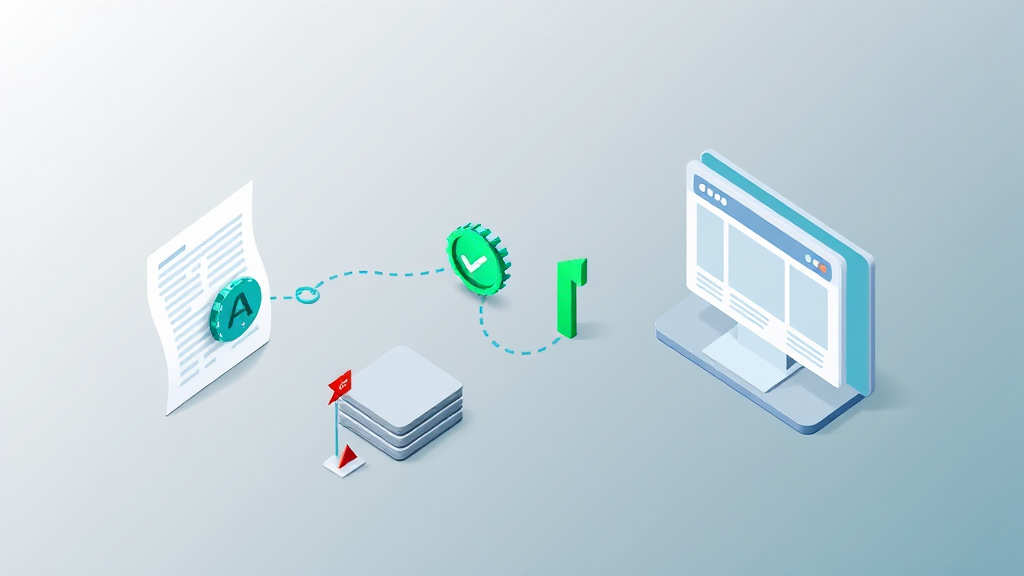
Will AI-Written Content Get Your Backlinks Penalized?
You bought a backlink and the placement article was AI-written — is that a penalty risk? The honest answer is no, not for being AI. Google penalizes low-quality, scaled content abuse regardless of how it's produced, and says appropriate AI use is fine. The real risk for a link buyer isn't the tool — it's thin, unedited, irrelevant content on junk sites. Here's what actually triggers a problem, what the ranking data shows, and how to use AI content safely for links.
Read
llms.txt & Agentic Search: Making Your Site Readable to AI Agents
Everyone's rushing to add llms.txt — and most are adding it for the wrong reason. The honest 2026 data: it does not move your AI citations (a 300,000-domain study found no lift, and search crawlers barely fetch it). Its real value is agentic readiness — the coding agents, MCP servers and shopping agents that already use it — as the agentic web arrives. Here's what llms.txt is, what the data actually shows, and the bigger job of making your whole site readable to AI agents.
Read
Generative Engine Optimization (GEO): How to Get Cited by ChatGPT & Perplexity
GEO is optimizing to be cited by AI answers, not to rank — and the two barely overlap: fewer than 10% of the sources AI engines quote rank in Google's top 10 for the same query. This is the on-page playbook that actually earns citations in ChatGPT, Perplexity, AI Overviews and Gemini in 2026: structure every passage to stand alone, lead with a 40–60 word answer, add statistics and sources, keep it fresh, and back it with the off-site credibility AI trusts.
Read