A Court Ordered Google to Share Its Search Index. A Backlink Is About to Work on More Than Google
 •October 30, 2026•11 min read
For twenty years "rank in Google" and "be visible on the web" meant almost the same thing, because one company's index was the web's de facto index and everything else was a rounding error. That is the quiet assumption under every link you have ever bought: a backlink's real job is to get a page crawled, indexed and trusted so that Google - and therefore the search world - surfaces it. On December 5, 2025, a federal court started pulling that assumption apart. The final judgment in the US search antitrust case orders Google to share its web search index and search data with approved competitors, and to license its results for syndication. The remedies are narrow, capped, and now tangled in appeals - but the structural idea is new: the index behind Google can be rented. Here is what the order says, where it actually stands, and why it changes what a link is worth.
Summary
- What happened: On December 5, 2025 Judge Amit Mehta entered final judgment in US v. Google (search), ordering behavioral remedies after the 2024 monopoly ruling. Structural break-up (selling Chrome/Android) was rejected.
- The index opens: Google must give "qualified competitors" access to its web search index and user-side data (queries, clicks, SERP interactions), priced near marginal cost with privacy safeguards, and must offer syndication of its organic results and text-ad feeds.
- The limits: syndication runs five years per license and is capped at 40% of annual US queries in year one, declining after that. It is a subset of Google's inputs, not a copy of Google.
- Where it stands: Google filed to appeal on January 16, 2026 and asked to pause the data-sharing and syndication requirements; the government is also appealing. As of late October 2026 the case is at the D.C. Circuit and no competitor has yet received the shared index.
- Why it matters for links: if rival search and AI engines can be built on Google's index, the payoff of a backlink - real indexation and trust - starts to propagate to more surfaces than google.com.
- The durable takeaway: the value of a link is becoming about getting into and trusted by the index everyone licenses - which rewards real, crawlable, editorial placements and punishes thin, cloaked and PBN links even more.
What the court actually ordered
This is the search case - United States v. Google LLC before Judge Amit Mehta in the US District Court for D.C. - not the separate ad-tech case in Virginia. After the August 2024 ruling that Google holds an illegal monopoly in general search, the remedies phase ran through 2025. In the September 2025 remedies decision the court declined the Justice Department's headline demand to force a sale of Chrome or Android. Instead it imposed behavioral remedies, and on December 5, 2025 it entered them as a final judgment.
Three pieces matter here. First, the prohibitions: Google's default-placement contracts (the deals that keep it the out-of-the-box search on phones and browsers) are curtailed - shortened to roughly a year, de-tied, and loosened so device makers have more freedom. Second, and new, the data: Google "is required to share" its web search index and user-side data with companies the court calls qualified competitors, with pricing set near marginal cost, privacy measures such as k-anonymity and noise injection, and advertising data carved out. Third, syndication: Google must offer licenses so those competitors can serve Google's ranked organic results and text-ad feeds, separately or bundled.
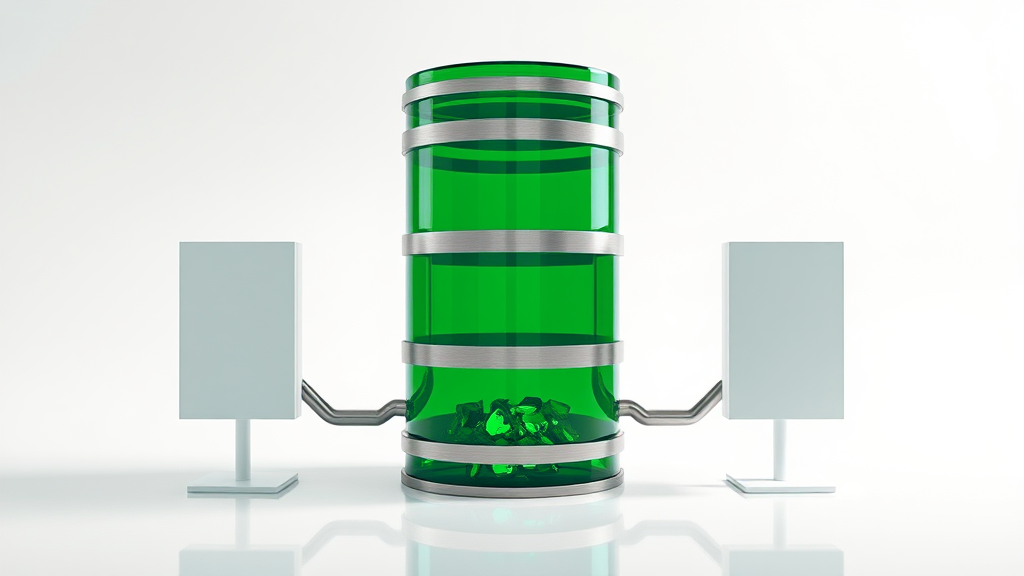
The index is the asset that has never been on the table before. Google's crawl of the web - the list of pages it has found, read and scored - is the thing competitors could never replicate, because you cannot bootstrap twenty years of crawling and click data. The judgment treats that index as an input others can rent rather than a moat Google alone owns.
The limits that keep it from being "Google for rent"
It is not a copy of Google, and the order is careful to say so. Syndication is capped at 40% of a licensee's annual US queries in the first year and is designed to taper down over the five-year license term - the point is to give rivals a leg up while they build their own capability, not to let them run a permanent Google clone. The shared index and data are a subset of what Google actually uses to rank; the court's own framing is that this supplies some of the inputs for a competitive search service, not the finished product. A six-year enforcement period and a court-appointed Technical Committee sit on top, to police how Google implements all of this.
And it is not live. Behavioral remedies took effect roughly 180 days after entry - mid-2026 - but Google has up to six months to build the data-sharing machinery after privacy safeguards are set, and the whole thing is under appeal. Google filed its notice of appeal to the D.C. Circuit on January 16, 2026 and asked the court to pause the data-sharing and syndication requirements while it appeals, arguing they cause irreversible harm if later overturned. The Justice Department and states are appealing too. As of late October 2026, there is no appellate ruling, and public reporting indicates qualified competitors had not yet begun receiving the index or data - access, if it survives appeal, is expected no earlier than late 2026 or early 2027. Treat this as a direction of travel with legal risk, not a switch that has been flipped.
Why this is a backlink story, not just an antitrust one
Strip the legal language away and the mechanism under link building is simple: you buy or earn a link so a page gets crawled, indexed, and trusted enough to be surfaced. For two decades the only index that mattered for that was Google's. Bing ran a distant second, and the AI answer engines that arrived after 2023 mostly sit on top of Google's or Bing's results anyway. So the entire economics of a backlink has been priced against a single destination.
The remedy introduces the possibility that the index itself becomes a shared utility. If a privacy search startup, a vertical search tool, or an AI-native answer engine can license Google's index and syndicate its results, then the pages Google has crawled and judged trustworthy become the raw material those products draw on. The work a good backlink does - earning a page real indexation and authority in Google - stops being a bet on one surface and starts being a bet on a substrate that several surfaces share. One editorial placement that gets genuinely indexed could, over time, show up in more places than google.com's ten blue links.
The honest version of that claim is narrow. Syndication is capped and shrinking by design; a licensee re-ranks and blends the feed with its own signals, so you are not guaranteed to appear anywhere just because you rank on Google; and AI engines already pull from many sources. Nobody should buy a link today because of a court order that is still being appealed. But the trajectory rewards one specific thing, and it is the thing that already works: being a real, indexable, trusted page on the open web.
| Provision | What it means |
|---|---|
| Index access | Qualified competitors can license Google's web search index - the pages it has crawled and scored |
| User-side data | Query, click and SERP-interaction data shared near marginal cost, with privacy safeguards; ad data excluded |
| Syndication | Licensees can serve Google's organic results and text-ad feeds, separately or bundled |
| Query cap | 40% of a licensee's annual US queries in year one, declining over the five-year license |
| Enforcement | Six-year period, overseen by a court-appointed Technical Committee; structural break-up rejected |
| Status | Entered Dec 5, 2025; on appeal since Jan 16, 2026; not yet delivered to competitors as of late Oct 2026 |
What a link buyer should actually do about it
Nothing dramatic, and that is the point - the move is to keep building the kind of links that pay off no matter which engine ends up reading the index:
- Buy placements that get indexed, not just published. A link only enters the index if the donor page is crawled and kept. Pages on real, active sites with genuine traffic get crawled and retained; orphaned pages on dead or cloaked domains do not. If the index becomes shared infrastructure, "is this page actually in the index" becomes the whole game.
- Prioritise editorial, in-content, topically relevant links. These are the links Google already treats as trustworthy - and trust is exactly the signal that travels when the index is licensed out. Relevance and context are doing more work every year; this accelerates it.
- Stop paying for footprints. Thin PBN links, scaled link drops and cloaked placements are discounted or de-indexed by Google now. A de-indexed link is worth nothing on google.com and worth nothing to anyone renting google.com's index either. The downside of junk links just got bigger, not smaller.
- Think in surfaces, not rankings. Pair link building with the brand-mention and citation work that AI answers reward, and measure presence across engines, not just a Google position. A link that earns indexation and a mention is positioned for whatever the index feeds next.
This is the logic behind how Rixot builds links: in-content editorial placements on niche-relevant publishers with real traffic - the pages that get crawled, indexed and trusted in the first place, and that keep their value if that index is ever shared downstream. You can see the model and the price per placement on our pricing page. It is also why we have argued that backlinks still matter for AI search: the authority a link builds is what gets you pulled into answers, wherever those answers are assembled.
Don't get ahead of the court
A caution, because this is the kind of story that invites overreach. Nothing has materially changed for your rankings yet. The remedies are being appealed by both sides; a higher court could narrow or vacate the data-sharing provisions; and even if they stand, the first competitors to license the index will be small, the syndication cap will be shrinking, and the practical effect on where your page appears will be gradual and hard to attribute. Anyone selling you "links for the post-Google index" today is selling speculation. The reason to care now is not to chase a new tactic - it is that the same forces already visible in search, where real audiences and editorial trust decide which donors are worth a link, are about to be shared across more of the web. Build for the index, not for a single results page, and you are covered either way.
FAQ
Is Google really being forced to share its search index?
Yes, under the December 5, 2025 final judgment in the US search antitrust case. Google must give "qualified competitors" access to its web search index and user-side data and offer syndication of its results. But the provisions are capped, time-limited, and under appeal, and no competitor had received the index as of late October 2026.
When does this actually take effect?
The behavioral remedies took effect roughly 180 days after entry - mid-2026 - but Google has up to six months to build the data-sharing systems, and it has appealed and asked to pause the data and syndication requirements. Realistically, if the remedies survive, access for competitors is not expected before late 2026 or early 2027.
Will my backlinks suddenly show up on other search engines?
Not automatically. Licensees re-rank and blend Google's feed with their own signals, syndication is capped and declining, and the shared index is a subset of what Google uses. The point is structural: the index becomes a shared input, so a page that is genuinely indexed and trusted is positioned to appear across more surfaces over time - not guaranteed to appear anywhere.
Does this change how I should buy links right now?
Only to reinforce what already works: buy editorial, in-content, topically relevant placements on real-traffic sites that actually get crawled and indexed, and avoid thin or cloaked links that Google de-indexes. A de-indexed link is worthless on Google and to anyone renting Google's index.
Is this the same as the Google ad-tech antitrust case?
No. This is the search case before Judge Mehta in Washington, D.C. The ad-tech case is a separate matter in Virginia with its own rulings. The index-sharing and syndication remedies come only from the search case.
Sources
- US District Court, D.D.C. - Final Judgment, United States v. Google LLC (entered Dec 5, 2025), case docket, courtlistener.com
- PPC Land - "Google files appeal challenging six-year search remedies," ppc.land
- PPC Land - "Google appeals DOJ search ruling, asks to pause data-sharing remedies," ppc.land
- Tech Policy Press - "Search Remedies in Google Antitrust Case Can Work Even if Company Stays on Top," techpolicy.press
- US SEC - Alphabet Inc. Form 10-Q (quarter ended June 30, 2026), legal proceedings, sec.gov