Backlink & SEO News
Real news and sharp analysis from the world of backlinks and search — Google updates, link-spam policy, and what actually works right now.
Will AI-Written Content Get Your Backlinks Penalized?
You bought a backlink and the placement article was AI-written — is that a penalty risk? The honest answer is no, not for being AI. Google penalizes low-quality, scaled content abuse regardless of how it's produced, and says appropriate AI use is fine. The real risk for a link buyer isn't the tool — it's thin, unedited, irrelevant content on junk sites. Here's what actually triggers a problem, what the ranking data shows, and how to use AI content safely for links.

llms.txt & Agentic Search: Making Your Site Readable to AI Agents
Everyone's rushing to add llms.txt — and most are adding it for the wrong reason. The honest 2026 data: it does not move your AI citations (a 300,000-domain study found no lift, and search crawlers barely fetch it). Its real value is agentic readiness — the coding agents, MCP servers and shopping agents that already use it — as the agentic web arrives. Here's what llms.txt is, what the data actually shows, and the bigger job of making your whole site readable to AI agents.
Read
Generative Engine Optimization (GEO): How to Get Cited by ChatGPT & Perplexity
GEO is optimizing to be cited by AI answers, not to rank — and the two barely overlap: fewer than 10% of the sources AI engines quote rank in Google's top 10 for the same query. This is the on-page playbook that actually earns citations in ChatGPT, Perplexity, AI Overviews and Gemini in 2026: structure every passage to stand alone, lead with a 40–60 word answer, add statistics and sources, keep it fresh, and back it with the off-site credibility AI trusts.
Read
Brand Mentions vs Backlinks: The New Authority Signal
"Brand mentions are the new backlinks" is half true. The honest 2026 answer: an unlinked mention is a weak, indirect signal for classic Google search — but a strong, direct input to AI visibility, correlating with AI citations about three times more than backlinks do. Here's what a mention actually does, the "implied links" myth worth dropping, why being named still matters even when it's indirect, and how to earn (and reclaim) mentions the smart way.
Read
Do Backlinks Still Matter for AI Overviews & ChatGPT?
With AI Overviews, ChatGPT and Perplexity answering the questions people used to Google, it's fair to ask whether backlinks still count. The 2026 data says yes — but their job changed. Backlinks are now a threshold, not a lever: they get your page into the trusted pool an AI draws from, but beyond a baseline it's brand mentions and citation-ready structure that decide whether you actually get quoted. Here's what the correlation studies really show, and how to build links for the AI-search era.
Read
How AI Is Changing Link Building (and What Still Needs a Human)
AI didn't kill link building — it moved the work. The grunt (finding sites, vetting metrics, writing the article, even placing the order) now collapses to minutes, while the parts that decide whether a link actually works — real editorial relevance, is-the-traffic-real, trust, and strategy — still need a human in the loop. Here's exactly what AI now does well, what it still can't be trusted to judge, and the model that wins: machine speed with human control.
Read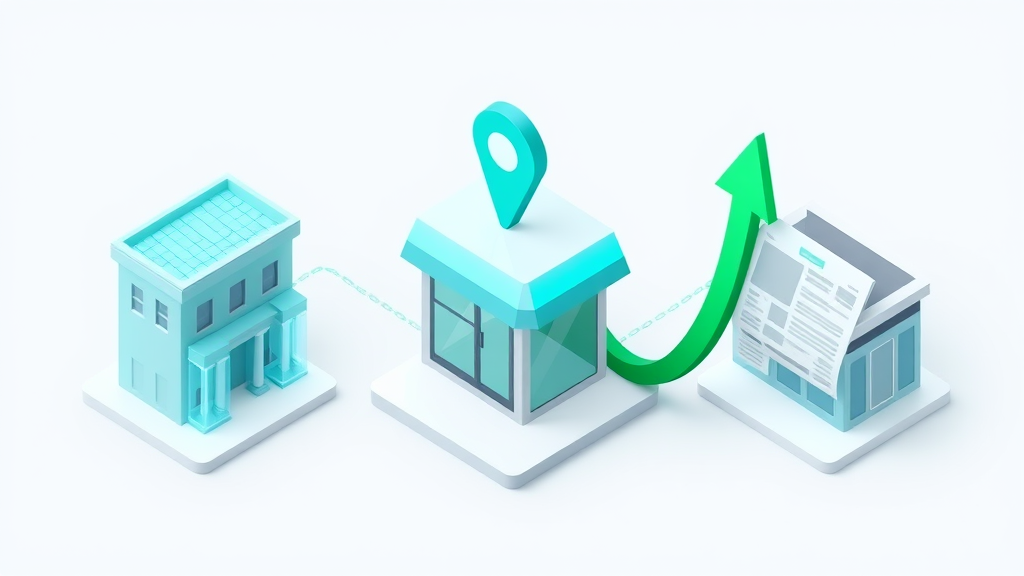
Local SEO Backlinks & the Map Pack: What Actually Moves You Up
Local link building runs on different rules than organic. Links are only about 15% of what ranks you in the Map Pack — Google Business Profile, reviews and on-page do most of the work — so you need far fewer of them, and geographic relevance beats volume every time. Three links from a local paper or chamber can outweigh fifty generic directories. Here's where local backlinks actually fit, the sources worth chasing, and how citations differ from links.
Read
The SaaS Link Building Playbook for 2026
SaaS link building is a different game — you own assets most sites never will (a product, proprietary data, an integration ecosystem), and your highest-value links point at pages that convert, not at the blog. This playbook covers where to actually point links, the product-led assets that earn them on autopilot, why integrations are the most relevant links you'll ever get, and the steady, relevance-first backbone that seeds authority while the rest compounds.
Read
Backlinks for a Brand-New Site: The 0→50 Playbook
A brand-new domain has zero authority, zero audience and zero reputation — so the first 50 backlinks are less about volume and more about sequence. This is the order we'd build them in: the foundation links you can get without outreach, the relevance-first middle stretch that actually moves rankings, and the earned links that compound. Plus the cadence that keeps a young site out of trouble, and the sites to never touch.
Read
Do You Still Need a Disavow File in 2026?
For almost every site, the honest answer is no — and a "preventive" disavow file is more likely to hurt you than help. Google's SpamBrain already neutralizes manipulative and negative-SEO links automatically, so disavowing them changes nothing, while disavowing borderline links quietly strips real ranking signal. Here's the only situation where you still need one, why quarterly hygiene disavows are net-negative, and why the 2026 spam updates aren't a disavow problem.
Read
PBN vs Editorial Links: What Google Detects in 2026
A PBN and an editorial link can look identical in a backlink tool — same DR, same dofollow, same in-content placement. What separates them is the footprint, and in 2026 SpamBrain reads footprints automatically. Here's exactly what Google detects — shared hosting, template and anchor patterns, expired-domain reboots, content sameness — why finding two or three connected sites is enough, and what actually makes a link editorial.
Read
Link Metrics That Actually Correlate With Rankings
Domain Rating is the number everyone quotes and the one Google never reads. Across a million-SERP analysis the metric that actually tracks rankings isn't DR or total backlinks — it's referring domains, and then relevance and real traffic. Here's which link metrics correlate with rankings in 2026, which are lagging vanity numbers, and how to plan links around the ones that move the needle.
Read