How AI Agents Are Starting to Buy Backlinks
 •September 7, 2026•9 min read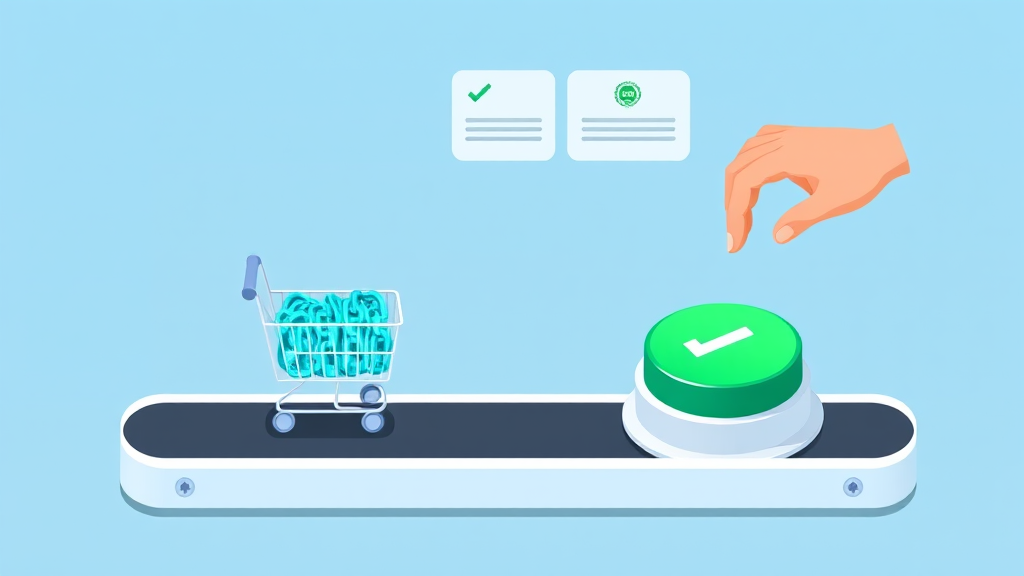
Until recently, "AI in link building" meant a model writing your outreach email. In 2026 it means something else: an agent inside ChatGPT or Claude that can search a catalogue of donor sites, compare relevance and traffic, draft the placement brief, place the order and report the live URL back — without a human clicking through a dashboard. Agentic procurement is here. The question is no longer whether agents will buy links, but under what rules.
Summary. An agent buying backlinks changes three things: speed (a shortlist in seconds instead of hours), consistency (the same relevance and traffic filters applied every time) and scale of mistakes (a bad instruction repeats itself fifty times). Google's link-spam rules do not change at all. The safe pattern is a written procurement contract for the agent — relevance-first sourcing, budget and cadence caps, anchor rules — plus one hard guardrail: no tool the agent can call is allowed to move money. A human approves every payment.
What "an agent buying links" actually means
The plumbing that makes this possible is the Model Context Protocol (MCP) — an open standard, introduced by Anthropic in late 2024, that lets an AI assistant call external tools over a simple, typed interface. OpenAI has since added MCP support to its API and ChatGPT connectors, so the same tool server can be used from either assistant.
Connect a backlink marketplace to that protocol and a conversation like this becomes an executable workflow:
- Prospecting. "Find ten sites in the SaaS niche with real organic traffic, DR 40+, under $20." The agent calls a search tool, gets structured rows back (domain, topic, traffic, price), and filters them.
- Briefing. "Write a placement brief for our pricing page targeting 'best CRM for small teams', branded anchor." The agent drafts the brief from the target page and your instructions.
- Ordering. The agent creates the orders — target URL, keyword, chosen donors — and puts them in a basket.
- Reporting. Days later: "Which of my links are live, and where?" The agent lists published URLs and their status.
Notice what is missing from that list: paying. That gap is deliberate, and it is the most important design decision in the whole setup — more on it below.
What changes when the buyer is an agent
1. The shortlist is built by rules, not by mood
A human buyer scanning a catalogue gets tired, anchors on a big DR number, and skips the boring relevance check. An agent applies the same filter to every candidate: topic match to the target page, evidence of organic traffic, outbound-link hygiene of the donor, price. If you wrote the filter well, the tenth placement is as carefully chosen as the first. If you wrote it badly, so is every one after it.
2. The unit of work becomes the target page, not the link
Agents are good at working from a URL. Give one your pricing page and it will read it, infer the topic, propose the keyword cluster and pick donors that cover the same subject. That quietly fixes the most common buying mistake we see: links ordered for a keyword the page does not actually rank for, or pointed at the homepage "because it's safer". Relevance is judged page-by-page, the way Google judges it — its link-spam policy is about patterns of manipulation, and topical mismatch is the first pattern its systems learn.
3. Mistakes scale too
The flip side. An instruction like "buy 50 DR60+ links this week for keyword X" is exactly the footprint that gets a profile devalued: identical anchors, a velocity spike on a small site, sources chosen for a metric rather than an audience. A human would have got bored after twelve. The agent finishes the job. Agentic buying therefore needs the guardrails that a careful human used to supply implicitly — written down, because the agent will not infer them.
4. Attribution finally becomes measurable
Because every order is a structured record — target page, keyword, donor, price, date, published URL — you get, for free, the dataset that most link-building programmes never assemble: which placements preceded which ranking moves. Correlation is not causation, but a clean log beats a spreadsheet of screenshots.
Why backlinks still deserve an agent's budget in an AI-search world
It is fair to ask whether links are worth automating at all now that so much discovery happens inside AI answers. The data says: still yes, with caveats. Across 5,825 URLs, backlink metrics showed a moderate correlation with visibility in ChatGPT (0.39), Perplexity (0.42) and Gemini (0.41), and a weak one for Google's AI Overviews (0.25) — see SALT's analysis. Ahrefs' study of 75,000 brands found that web mentions of a brand correlate with AI Overview visibility at 0.664 versus 0.218 for backlinks. Read together: an in-content placement on a relevant, real-traffic site is both a link and a brand mention, which is why the placement type matters far more than the count. An agent that optimises for count is optimising for the weaker signal.
The procurement contract: what to tell the agent before it spends a cent
Treat the agent like a new junior buyer with a company card. You would not say "get links"; you would hand over a policy. Ours fits on one page:
| Rule | What to specify | Why |
|---|---|---|
| Relevance first | Donor topic must match the target page's subject; DR is a filter, never the objective | Off-topic links are the first footprint SpamBrain learns |
| Real traffic | Only donors with verified organic visitors, not a metrics screenshot | A link nobody sees is a link Google discounts |
| Budget and cadence caps | Max spend per week and max new referring domains per week, scaled to the site's age | Velocity is judged relative to your authority |
| Anchor mix | Mostly branded and natural phrases; exact-match commercial anchors in single digits | Anchor over-optimisation is the second footprint |
| Source diversity | No more than one placement per donor per quarter; spread across sites and countries | Repeated sources read as a network |
| Content standard | Editorial article on the donor's subject, one contextual link, no thin filler | Google's scaled-content policy applies to the donor page too |
| Kill switch | Stop if a donor fails a check, a price exceeds the cap, or a ranking drops after a batch | Agents do not notice "something feels off" |
Everything in that table is a sentence you can paste into the agent's instructions. The point is not that agents are careless; it is that they are literal. Whatever you leave out, they will not add.
The one guardrail that is not negotiable: no money tool
Here is the design principle we would insist on for any vendor, including ourselves. An agent should be able to search, draft, order and check status — and it should be structurally unable to pay. In practice that means the tool server simply does not expose a "charge" or "top up" tool. Orders sit in a basket at zero cost; payment is a separate, explicit action that a human takes, after seeing the total.
That is how the Rixot MCP server is built: seven tools cover donor search, ordering, basket and status, and none of them can move money; publishing the basket is a distinct call that re-checks the total against what the human approved. We describe the full flow, including the raw log of a real session, in Order Backlinks with AI. The reason is not distrust of the model. It is that the cost of a runaway loop — an agent re-ordering because a tool timed out — should be an untidy basket, never an empty balance.
How to tell an "agent-ready" vendor from a dashboard with a chatbot
- Machine-readable catalogue. The agent must get structured fields (topic, traffic, DR, price, language, country) — not a screenshot of a table.
- An open protocol, not a proprietary plugin. MCP or a documented REST API that ChatGPT and Claude can both call.
- No auto-charge. Ordering and paying are different calls; the agent cannot perform the second.
- An audit log. Every tool call recorded with who, what, when — so you can reconstruct what the agent did.
- Published URLs returned. The agent (and you) can verify each placement is live, indexed and still there next quarter.
- Editorial placement, disclosed honestly. Google's guidance on qualifying outbound links exists for a reason; a vendor that pretends the rules do not apply is a vendor whose links will not last.
What stays human
Strategy: which pages deserve links this quarter, and why. Brand voice in the placement brief. Reading the published article once — five minutes that catch the off-topic paragraph a model was happy with. Deciding what to do when a ranking drops. And, always, the payment. Agents remove the tedium of procurement; they do not remove the judgement. Teams that treat "the agent handles links" as "nobody handles links" will discover, at scale, why the rules in the table exist.
A realistic first month
- Week 1: connect the agent, run searches only. Review its shortlists against your own judgement until the filters produce lists you would have made yourself.
- Week 2: let it draft briefs and place two or three orders into the basket. Pay manually. Read the published articles.
- Weeks 3–4: raise the cadence cap only if every check passed. Log target page, donor and date for each placement; you will want that data in month three.
Done this way, agentic link buying is not a shortcut around quality — it is quality applied consistently, at a speed no human buyer sustains. Browse the catalogue the agents read from, or see what a placement costs.
FAQ
Can an AI agent actually pay for backlinks on my behalf?
It should not be able to. In a well-designed setup the agent can search, draft, order and check status, but payment is a separate human action that no agent tool can trigger. If a vendor's agent integration can charge your balance, treat that as a red flag.
Does Google penalise links bought through an AI agent?
Google's link-spam policy is about the pattern, not the buyer: manipulative, off-topic, over-optimised links are devalued whether a person or an agent ordered them. Relevant, editorial placements on real-traffic sites with natural anchors are judged the same way regardless of how the order was placed.
Which assistants can run this today?
Any assistant that speaks MCP or can call a REST API — currently that includes Claude (web and desktop) and ChatGPT with remote MCP connectors, plus agent frameworks that run on a schedule.
How many links should the agent be allowed to buy?
Set the cap by the site's age and current authority, not by budget: a handful of new referring domains per month for a young site, more for an established one, and never a batch that would look like a spike relative to your history.